Forgotten American Novels
My daily reading habit has been the same for the last decade. I wake up between 4-4:30am, make coffee, and read for an hour or two. I’ve always felt I was accessing some hidden part of the day, and it’s through this secret passageway I stumble into other worlds. I might find myself walking along the wisteria-laced landscapes of Faulkner’s Yoknapatawpha. Or crawling among the rats of David Bottom’s Bibb County Dump. My favorite books are often focused on place. This realization came to me as I weathered a harsh Ohio snowstorm in the dewy, spring-fragrant pages of Powys’ A Glastonbury Romance. At the end of the epic novel, I was reluctant to leave the Isle of Avalon. But doing so sparked a question. What other novels of this scope could I take shelter in? Surely there’re sprawling American works of fiction that have been forgotten.
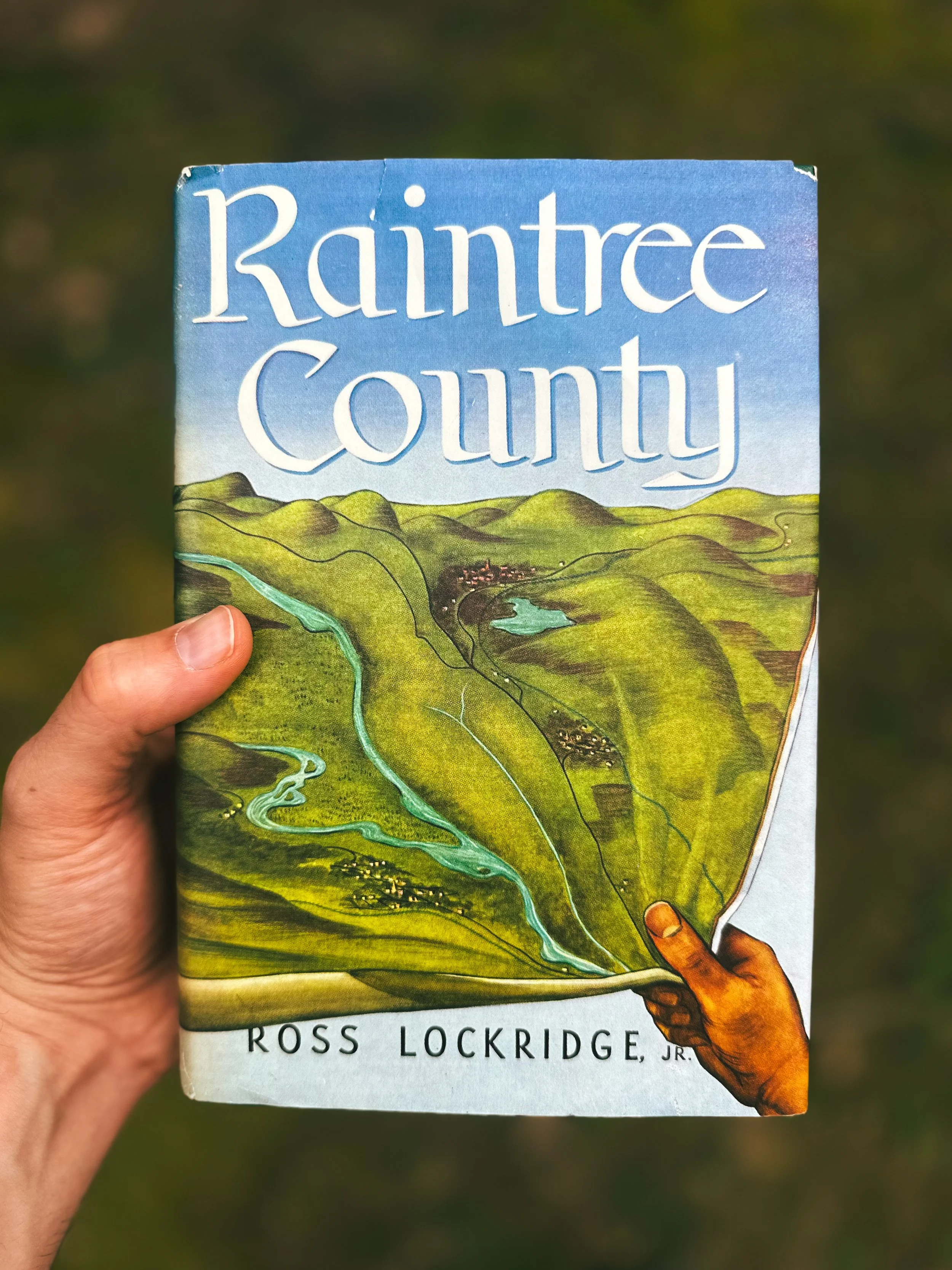
Raintree County by Ross Lockridge Jr. - 1948 - 1,050 pages
The first and only book from the list I’ve read so far. This lyrical novel follows John Wickliff Shawnessy at age fifty-three throughout a single day, July 4th 1892. By passing seamlessly into John’s memories, the book explores American identity, the Civil War, the fictional Raintree County, Indiana, and that ever-shifting line which separates history from myth. I’d consider it one of the great American novels. Just as interesting is the story of its author. After finally getting his book published, though he was required to remove nearly 200,000 words, Lockridge Jr. had seemingly reached the pinnacle of his artistic ambitions. He was even awarded a literary prize, equivalent to $3.5 million today. Still, Lockridge Jr. committed suicide only months after Raintree County was published, leaving behind his wife, Vernice, and their four children. He parked the Kaiser in the garage and left it running, poisoning himself with carbon monoxide. When they found him, the door was opened and his legs hung over the running boards, hinting at a last minute change of mind.
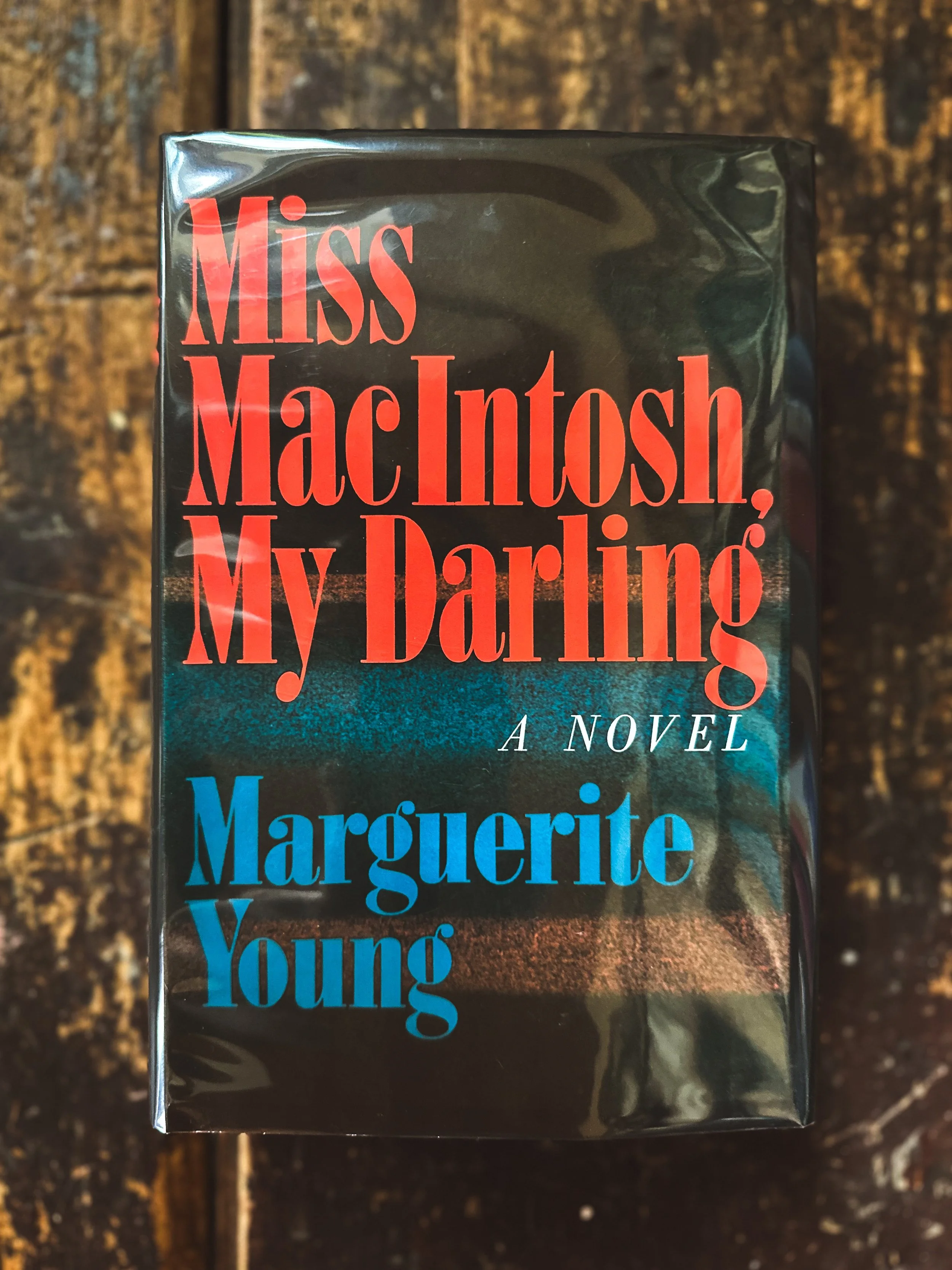
Miss MacIntosh, My Darling by Marguerite Young – 1965 – 1,198 pages
Not exactly forgotten, due to Dalkey Archive’s 2024 reprinting, but I’d argue it’s still criminally underread. The best description I’ve found of the book comes, not surprisingly, from the author. Young pitched MMMD as “an exploration of the illusions, hallucinations, errors of judgment in individual lives, the central scene of the novel being an opium addict’s paradise.” The novel, somewhat like Raintree County, takes place during the duration of a single yet surreal bus ride in which Vera Cartwheel travels from New England to What Cheer, Iowa. After my copy arrived, I hiked up the driveway under an intense wind, vibrant red maple samaras spiraling downward, reading the opening pages. Without realizing it, I was quickly carried off on the vast current of Young’s poetic prose. Resurfacing that evening, I’d drifted a total of sixty pages.
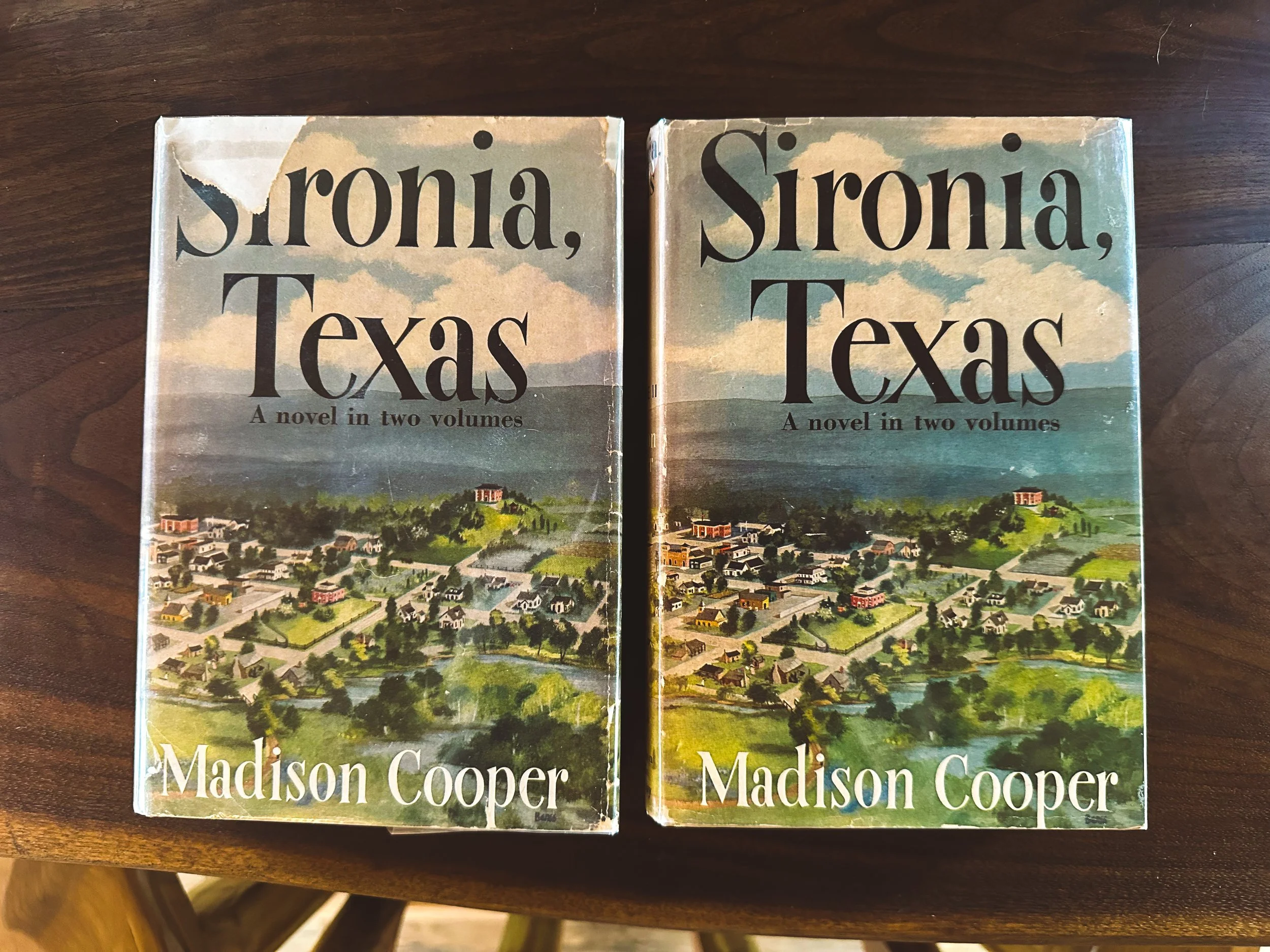
Sirionia, Texas – Madison Cooper – 1952 – 1,731 pages
Despite my interest in reading these expansive works of American fiction, I’d somehow never heard of this book until a few months ago. I was able to track down the original two-volume set, which aren’t easy to find these days, and to my surprise it was signed by Cooper. Place is certainly at the focal point of this novel, as you may have guessed from the title. Sirionia, Texas is a fictionalized rendering of Cooper’s hometown - Waco, Texas. The novel attempts to highlight the vast social changes of Southern life during the early 20th century. Cooper also suffered a sudden death, though it wasn’t a suicide. He finished a run at the Waco Municipal Stadium track, as he did a few times each week, walked back to the parking lot where he had a heart attack behind the steering wheel of his Packard. He requested his literary files be burned upon his death. Unfortunately, they were.
Blessed Are the Mourners – Nathaniel Flint – 1910 (1963?) – 3,482 pages
A book I’ve spent a long time reading about and searching for. Flint was from Greenville, Mississippi. At fifteen he became a soldier for the 6th Regiment of the Mississippi Infantry, a rearguard as they marched toward Shiloh. Surviving the war, Flint left Mississippi in self-exile. Blessed Are the Mourners could be classified as an early example of autofiction in American literature. The protagonist, Zeke Carrington, is also a Civil War veteran, self-exiled from Mississippi to an unnamed northern town just across the Illinois border. Zeke, now an elderly man, decides to return to the Mississippi Delta to find and restore the house where his wife and young son were murdered. This is how he plans to spend his remaining years, surrounded by the memories lodged within those walls. While working on the house, Zeke hits his head and awakens back in the antebellum South. Realizing he can now alter to his trajectory, Zeke becomes set on saving his wife and son. Unable to do this, Zeke is forced to relive the loss and carry the burden for a second lifetime.
The publication history is convoluted at best. From what I’ve read via online forums, the work was never published during Flint’s life, but the manuscript was found by a man in Massachusetts named Glen Evans in the 1960’s. Evans was so moved by the manuscript he self-published roughly thirty copies. However, Evans’ family claimed he was having a “mental episode,” that there was no Nathaniel Flint, and the book was the ramblings of a sick, unstable mind. The family checked Evans into Danvers State Hospital, where he spent the last quarter of his life, and destroyed all the copies of the book. Well, almost all of them.
A week ago, I’d arranged over marketplace to meet with a woman in Mount Olivet, Kentucky to purchase a bundle of forty books. She had some hard to find first editions worth much more than I was paying. The complete set of Mishima’s The Sea of Fertility tetralogy was the main target. They’d belonged to her grandfather, who was an English Professor, though she said the family was originally from Mississippi. Spring seemed to arrive as I drove the winding backroads, windows down, fields of sap-green grass rippled with purple deadnettle in wide sluices of sunlight. We met at a Dollar General. She handed me a large cardboard box of books in exchange for my cash. At home, I went through the box to see how I’d made out. I found an 1980’s trade paperback of Gene Wolfe’s The Shadow of the Torturer. At the bottom was a very large paperback with duct tape on the spine. At first I thought it was an old bible. A kind of family heirloom that must never be tossed out, regardless of its tattered condition. But then I noticed the title. Blessed Are the Mourners. Maroon lettering on tobacco-colored paper. Very brittle and nearly falling apart, I retaped the binding and have been looking through it over the last week. It contains letters, photos, narrative, maps, and even a few collages. I’m hesitant to share a photo of the book, but I’ll close with what has become one of my favorite opening paragraphs.
“Long after the battle smoke had disbanded, after the bluecoats had drifted north again, and after the stench of death had given way to the sweet perfume of gardenias blooming from the boundless shade of it all, it was you, Delilah, who remained. Your face I see now, plaintive yet hopeful, within the dark hollows of this Illinois town I call home though it never has been. You are etched upon each movement, rooted in the floorboards rough underneath my feet, still the wind tows a trace of what once was. You, the fragment of memory I cannot outrun, though shamefully, I have tried.
I try often.”
